
Product Introduction


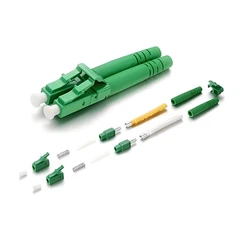
Fiber connectivity hardware forms the physical layer foundation for high-bandwidth optical transmission networks. This portfolio covers single-mode and multi-mode optical patch cables, pre-terminated multi-fiber trunks (MPO/MTP), ruggedized outdoor assemblies, and distribution enclosures engineered for low optical attenuation and high mechanical endurance. Every assembly complies with Telcordia GR-326-CORE and IEC 61754 standards, utilizing precision ceramic ferrules and low-smoke zero-halogen (LSZH) cable jackets to maintain signal integrity in demanding enterprise and carrier-grade environments.


  • SC Pigtail Single Mode

    In the realm of long-haul and high-speed optical networks, the SC fiber pigtail single mode emerges as an irreplaceable connectivity solution, engineered to establish stable and low-loss links

  • Lc Fiber Pigtail Single Mode

    In the landscape of modern optical communication systems, the LC fiber pigtail single mode stands out as a critical connectivity component, designed to bridge optical transceivers, active devices,

  • MU Fiber Optic Pigtail

    The Brolink MU fiber optic Pigtail is particularly valued for its space-saving design, which is ideal for high-density installations in data centers and telecommunication networks. Its combination of

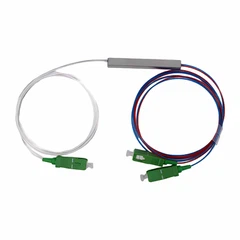
  • Sc Apc Pigtail Single Mode

    The sc apc pigtail single mode are short lengths of optical fiber featuring a pre-terminated connector on one end and exposed fiber on the other for field termination. They provide low-loss

  • Fc Pigtail

    The Brolink fc pigtail is particularly valued for its space-saving design, there is only one end with connector, and the other end is the section of a fiber optic cable, Pigtails are divided into

  • Single Lc Connector

    The single lc connector is a widely used miniaturized connector in fiber-optic communication systems. Its core function is to enable accurate, low-loss, and reusable optical signal connection

  • Sc Pc Fiber Connector

    The sc pc fiber connector is a single-mode/multimode optical fiber connector with a square-shaped housing (SC: Subscriber Connector) and a Physical Contact (PC) ferrule polish. It uses a push-pull

  • Single Mode St Connector

    BROlink’s single mode ST connectors stand out with four key strengths: crafted from premium materials like nickel-plated brass bodies and ceramic ferrules—alongside precise manufacturing—they ensure

  • E2000 Single Mode Connector

    The E2000 Fiber Optic Connector is a premium-grade connector designed for high-performance singlemode and multimode applications. Known for its spring-loaded metal shutter, it provides automatic dust

  • Lc Apc Fiber Connector

    As a high-performance connectivity device for professional optical communication scenarios, the Brolink LC APC Fiber Connector relies on mature optical technology and precision manufacturing

  • Mpo 12 Fiber Connector

    The Brolink’s 12 Fiber MPO to MPO Trunk Cables are engineered for high-performance, high-density connectivity in modern data centers, enterprise networks, and telecommunication environments. These

  • Sc Adapter

    Fiber optic adapter, also called coupler, is a small device designed to terminate or link the fiber optic cables or fiber optic connectors between two fiber optic lines.By linking two connectors

First 123 Last
 
Key Specifications

Optical Performance:

Single-mode UPC return loss >= 50 dB; APC return loss >= 60 dB. Multi-mode insertion loss typical <= 0.10 dB.


End-Face Geometry (IEC 61755-3):

Apex offset < 50 um, fiber height -100 nm to +250 nm, radius of curvature 10 mm to 25 mm (PC/UPC).

Mechanical Endurance:

Connector durability > 500 mating cycles with < 0.2 dB change in insertion loss. Tensile strength rating of 100 N for 2.0 mm jacketed cables.

Environmental Ratings:

Operating temperature range -40 deg C to +85 deg C. Storage temperature -45 deg C to +85 deg C.

Compliance Standards:

RoHS compliant, REACH compliant, UL 94-V0 flame retardancy for connector housings, and IEC 60332-3-22 for cable jacket fire performance.


Product Types / Configurations


Configuration Type

Core Application

Available Fiber Types

Typical Insertion Loss

Simplex / Duplex Patch Cords

Equipment interconnect, patch panels

G.652D, G.657A2, OM3, OM4, OM5

<= 0.15 dB (UPC), <= 0.20 dB (APC)

MPO/MTP Trunk Assemblies

High-density data center backbone

OM3, OM4, OM5, OS2

<= 0.35 dB (Elite version)

Armored Fiber Patch Cords

Industrial floors, heavy-traffic ducts

G.652D, G.657A1

<= 0.20 dB

Pigtails & Fan-out Kits

Splice trays, distribution frames

G.652D, G.657A2, OM4

<= 0.15 dB


How to Select
 

Selecting the correct fiber connectivity hardware requires aligning optical parameters with physical deployment constraints.

01/

Determine Fiber Mode and Standard: Choose OS2 (G.652D or G.657A2 bend-insensitive) for long-haul and enterprise campus backbones. Choose OM3, OM4, or OM5 for short-reach data center switch-to-server links (10G to 400G).

02/

Select Polish Type: Specify APC (8-degree angle) for RF video, FTTx, and high-speed data transmission where return loss must exceed 60 dB. Use UPC (0-degree flat) for general transceiver connections.

03/

Evaluate Mechanical Protection: Select stainless steel tube armored cables for industrial automation floors or pathways prone to rodent damage. Choose standard OFNP/LSZH zip-cord for controlled raised-floor data center environments.

04/

Calculate Link Budgets: Factor in connector insertion loss maximums (0.15 dB to 0.30 dB per mating pair) against active transceiver receiver sensitivity thresholds to prevent packet loss.


Applications


Data Centers:

Interconnecting switches, routers, and high-density optical distribution frames (ODF) using high-fiber-count MPO trunk lines.

Telecom Infrastructure:

Central office cross-connects, outdoor cabinet routing, and FTTH passive optical networks (PON).

SC Pigtail Single Mode

Industrial Automation:

Linking remote terminal units (RTUs) and programmable logic controllers (PLCs) across electromagnetic interference (EMI) heavy factory floors.

Enterprise Networks:

Building backbone cabling systems running across multiple communication closets.


Customization Options

Cable Lengths & Breakouts:

Custom overall trunk lengths measured in centimeters, with tailored fan-out lengths and staggered breakout configurations.

Connector Combinations:

Mixed connector pairing options including LC, SC, FC, ST, E2000, and MPO/MTP (pinned or unpinned).

Jacket Materials & Colors:

Customized outer jacket compounds including LSZH, PVC, PE (outdoor rated), and TPU, available in standard TIA/EIA-598 color codes or custom hues.

Labeling & Packaging:

Laser-etched serial numbers on connector boots, custom barcode labeling, and anti-static bulk or individual tray packaging.


Manufacturing & Quality Control
1

Ferrule Preparation:

Automatic CNC fiber stripping, ultrasonic cleaning, and optical epoxy curing ovens operating at controlled thermal profiles.

2

Polishing Process:

Multi-stage machine polishing utilizing specialized Domex lapping films to achieve precise radius of curvature and eliminate surface micro-scratches.

3

Interferometer Inspection:

100% end-face geometric testing via Daisi Seiki interferometers to measure apex offset, radius of curvature, and fiber height.

4

Optical Testing:

Insertion loss and return loss tested on every single assembly using EXFO multi-channel optical loss test sets calibrated to NIST standards. Test reports archived by serial number.


Packaging & Delivery


01
 

Inner Packaging:

Individual anti-static blister packs or sealed PE bags containing individual test result slips.

 
02
 

Outer Packaging:

Heavy-duty double-wall corrugated cartons reinforced with edge protectors to prevent crush damage during international transit.

 
03
 

Logistics Support:

Palletized freight handling for bulk orders, supporting sea freight, air cargo, and express courier dispatch with complete customs documentation (commercial invoices, packing lists, and certificate of origin).

MU Fiber Optic Pigtail


Why This Product for Your Project


Batch Traceability:

Every assembly carries a unique laser-engraved serial number linked directly to its raw material lot, interferometer scan, and optical test log.

Zero-Defect Standard:

Automated end-face cleanliness inspection ensures microscopic debris is removed before factory shipment, protecting expensive active transceiver ports from contamination.

Direct Factory Engineering:

Access to direct engineering support for custom polarity mapping, non-standard breakout designs, and specialized mechanical tolerances.


FAQ


Q: How do you ensure end-face cleanliness on multi-fiber MPO connectors?

A: All MPO/MTP connectors undergo automated dry-cleaning using specialized reel cleaners followed by 400x digital microscope inspection. Any assembly showing particulate contamination within the core zone is rejected prior to final packaging.

Q: What is the standard lead time for customized pre-terminated MPO trunk cables?

A: Standard production for customized trunk configurations takes 5 to 7 business days for quantities under 500 assemblies, excluding shipping transit time. Expedited production schedules are available for critical project rollouts.

Q: Can test reports be provided prior to shipment?

A: Yes. Individual insertion loss and return loss test data sheets, along with sample interferometer reports, are digitized and sent via secure link before physical dispatch. Hard copies are included in the master carton.

Q: What is the difference between G.652D and G.657A2 fiber in field deployment?

A: G.652D is the standard single-mode fiber for general long-haul and data center runs. G.657A2 features enhanced macro-bend performance, allowing a tighter bend radius (7.5 mm vs 30 mm), which minimizes signal attenuation in tight cable management routing and high-density patch panels.

Q: Are these assemblies compatible with standard third-party transceivers?

A: Yes. All connector ferrules are polished to precise physical contact (PC, UPC, or APC) geometries meeting TIA/EIA-604 and IEC 61754 specifications, ensuring mechanical and optical compatibility with active hardware from major networking vendors.

Q: What is the minimum bend radius for armored fiber patch cords during installation?

A: For short-term installation under tension, the minimum bend radius is 20x the outer cable diameter. For long-term stationary deployment, the minimum bend radius is 10x the outer diameter when utilizing bend-optimized fiber cores.

As one of the most experienced fiber connectivity manufacturers and suppliers in China, we offer a wide range of products with superior quality. We warmly welcome you to buy high-grade fiber connectivity in stock here and get quotation from our factory. For price consultation, contact us.

Send Inquiry