


What is the role of cat cables in an FTTH network?
Jun 10, 2026
Leave a message
In the era of high - speed digital communication, Fiber to the Home (FTTH) networks have emerged as the gold standard for delivering ultra - fast and reliable internet access to residential and commercial users. While fiber optic cables are the backbone of FTTH networks, Cat cables also play a crucial and often underestimated role. As a Cat cable supplier, I am well - versed in the significance of these cables in an FTTH ecosystem.
Understanding FTTH Networks
FTTH networks bring fiber optic cables directly to individual homes or buildings. This technology offers several advantages, including extremely high bandwidth, low latency, and immunity to electromagnetic interference. Fiber optic cables can transmit data over long distances at speeds that far exceed traditional copper - based networks. However, the journey of data from the fiber optic termination point to the end - user devices is where Cat cables come into play.
The Role of Cat Cables in the Last - Mile Connection
The last - mile connection in an FTTH network refers to the link between the fiber optic termination point (usually a fiber optic modem or ONT - Optical Network Terminal) and the end - user devices such as computers, routers, smart TVs, and gaming consoles. Cat cables are the primary choice for this last - mile connection for several reasons.
Data Transmission
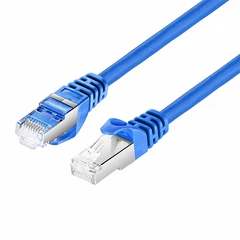
Cat cables are designed to carry high - speed data signals. For example, CAT6 CM 23AWG Copper Cable is capable of supporting Gigabit Ethernet speeds, which is essential for modern applications that require large amounts of data transfer, such as high - definition video streaming, online gaming, and cloud - based services. The 23AWG (American Wire Gauge) copper conductors in this cable provide a good balance between signal quality and cable flexibility.
Similarly, CAT5e UTP 28AWG SPE Copper Cable is also a popular choice for less demanding applications. It can support up to 1 Gigabit per second (Gbps) data transfer speeds, making it suitable for home networks where multiple devices need to connect to the internet simultaneously.
Compatibility
Cat cables are highly compatible with a wide range of networking devices. Most networking equipment, including routers, switches, and network interface cards (NICs), are designed to work with Cat cables. This compatibility ensures that users can easily connect their devices to the network without the need for complex adapters or converters.
Cost - Effectiveness
Compared to fiber optic cables, Cat cables are generally more cost - effective. They are easier to install and require less specialized equipment. For home and small - business users, this makes Cat cables a practical choice for the last - mile connection. The initial investment in Cat cables is relatively low, and they also have lower maintenance costs over time.
Cat Cables in Network Expansion and Upgrades
As the demand for higher bandwidth and faster speeds continues to grow, Cat cables play a vital role in network expansion and upgrades. For example, if a user wants to upgrade their home network from a 100 Mbps connection to a Gigabit connection, they can simply replace their existing Cat5 cables with CAT6 UTP CMP 4PR Copper Patch Cables. These cables are designed to support higher frequencies and data rates, allowing for seamless upgrades without the need for a complete network overhaul.
Quality and Performance Considerations
When it comes to Cat cables in an FTTH network, quality and performance are of utmost importance. Poor - quality cables can lead to signal degradation, which can result in slower speeds, intermittent connectivity, and increased network errors. As a Cat cable supplier, we ensure that our cables meet the highest industry standards.
We use high - quality copper conductors and advanced insulation materials to minimize signal loss and interference. Our cables are also rigorously tested to ensure that they can withstand the rigors of daily use, including bending, twisting, and temperature variations.
Installation and Maintenance
Proper installation of Cat cables is crucial for optimal performance. Incorrect installation can lead to signal attenuation and crosstalk, which can significantly impact network speeds. Our team of experts can provide guidance on the correct installation techniques, including cable routing, termination, and grounding.
In terms of maintenance, Cat cables are relatively easy to maintain. Regular inspections can help identify any signs of damage or wear, and damaged cables can be easily replaced. This ensures that the network remains reliable and efficient over time.
Future Trends
The future of Cat cables in FTTH networks looks promising. As technology continues to evolve, we can expect to see even higher - performance Cat cables. For example, new standards are being developed to support 10 Gigabit Ethernet speeds over copper cables, which will further enhance the capabilities of Cat cables in FTTH networks.
Conclusion
In conclusion, Cat cables play a vital role in an FTTH network. They are the bridge between the fiber optic backbone and the end - user devices, providing a reliable and cost - effective solution for the last - mile connection. As a Cat cable supplier, we are committed to providing high - quality cables that meet the ever - growing demands of modern FTTH networks.
If you are looking to upgrade or expand your FTTH network, or if you have any questions about our Cat cables, we invite you to contact us for a consultation. Our team of experts is ready to assist you in finding the right Cat cable solutions for your specific needs.


References
- IEEE Standards Association. "Ethernet Standards."
- Telecommunications Industry Association (TIA). "Cabling Standards for Data Networks."
Send Inquiry