



How AI Is Reshaping Fiber Networks in Data Centers
Sep 11, 2026
Leave a message
ICC News Recently, Ankit Agarwal, Managing Director of STL (Sterlite Technologies Ltd.), was interviewed by Linda Hardesty, Editor of Fierce Network. They discussed how AI and data center expansion are transforming demands for fiber infrastructure, as well as STL's next-generation optical solutions under development.
STL's Optical Innovations
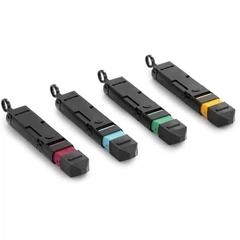
Ankit Agarwal noted that STL has nearly 30 years of experience in the fiber industry and holds around 800 patents. The company has rolled out the Neuralis product portfolio, addressing end-to-end fiber layer requirements for data centers, ranging from optical preforms and fibers to cables and connectivity components. Recently, STL's MMC connector obtained US Conec certification, representing a next-generation high-density connectivity solution. In addition, STL is developing hollow-core fiber and multi-core fiber. Its four-core multi-core fiber has been commercially deployed in partnership with Colt in the UK; hollow-core fiber cables have been manufactured and are currently undergoing trials in India.
Three-Tier Fiber Network Requirements for Data Centers
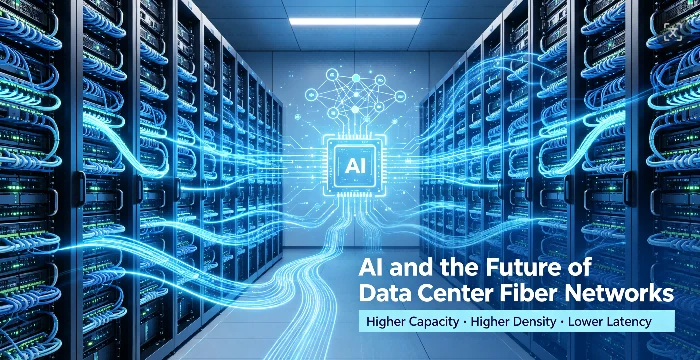
Agarwal pointed out that fiber demands for data centers are becoming increasingly intensive with severe space constraints, while data centers require ultra-low latency. STL observes the formation of a three-tier network architecture:
Long-haul networks: Typically built by telecom operators or neutral fiber providers, requiring high capacity and low latency.
Campus networks: A campus usually comprises 10 to 12 buildings and demands ultra-high-capacity optical cables, with typical cables reaching 7,000 fibers per cable. STL is among the few manufacturers capable of producing such high-fiber-count cables.
Intra-data-center networks: Involving massive terminations.
STL is one of the few companies with a complete product portfolio spanning long-haul networks down to inside data center environments. The company is reducing fiber cladding diameter from 240 μm to 200 μm, with an eventual target of 160 μm, to enable deployment of higher fiber counts within the same conduit space. Meanwhile, STL is researching the application of hollow-core fiber and multi-core fiber in data centers and resolving fusion splicing compatibility issues between these advanced fibers and legacy networks. The ultimate goal is to deliver end-to-end solutions and cut total cost of ownership by at least 20% to 30%. 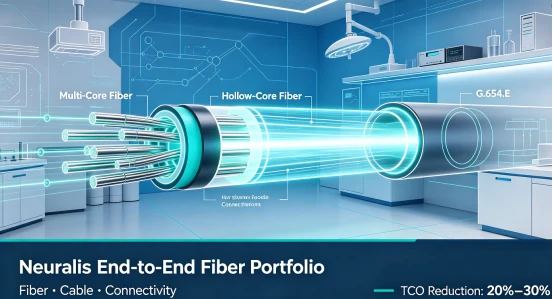
The Importance of G.654.E
Agarwal said that as networks evolve from 400G to 800G and beyond, requirements are clear: high-capacity long-haul networks, low attenuation, and a large effective area to manage signal distortion. G.654.E serves as a key component of next-generation optical fiber. STL believes its G.654 fiber and network deployments will deliver substantially higher capacity while maintaining low loss. Deployments have commenced in parts of Asia, while most regions in the US and Europe are at an inflection point for building these networks.
This article is contributed by STL (Sterlite Technologies Ltd.).
Content from: 讯石光通讯网
URL: http://www.iccsz.com//Site/CN/News/2026/09/14/20260914024426906645.htm
Article Title: How AI is Reshaping Data Center Fiber Networks
Send Inquiry