



Rising Household Demand For Multi-Gigabit Internet Boosts Global FTTH Fiber Cable Deployment
Sep 30, 2026
Leave a message
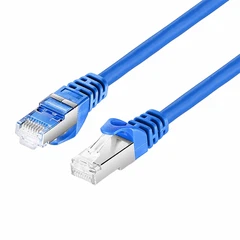
Household internet requirements are undergoing a major shift in 2026. Modern families rely heavily on multiple concurrent online activities: 8K video streaming, cloud gaming, remote work, online education, smart home sensors, security cameras, VR devices and connected IoT appliances. A typical household today may have 15 to 25 connected devices active at the same time, placing unprecedented pressure on last-mile broadband networks. Traditional copper cables such as ADSL and VDSL can no longer deliver stable high-speed connections for these multi-device home scenarios, especially during evening peak hours when streaming, gaming and video calls overlap. This fundamental change pushes telecom operators and internet service providers worldwide to accelerate FTTH (Fiber to the Home) rollout in both urban and rural markets.
FTTH uses fiber optic drop cables to bring optical signals directly into individual houses, bypassing copper altogether. Compared with old copper lines, fiber delivers symmetrical multi-gigabit bandwidth-often 1 Gbps to 10 Gbps today, with clear upgrade paths toward 25G and 50G PON in the near future. Fiber also offers ultra-low latency, near-perfect anti-interference performance, and immunity to electromagnetic noise from power lines or household appliances. Even during peak evening hours when every family member is streaming, gaming or attending video calls simultaneously, fiber internet maintains a steady connection without obvious slowdown, packet loss or buffering. In addition, a single fiber line supports decades of future bandwidth growth without requiring repeated physical cabling upgrades, making it the only viable long-term access medium for the digital home.

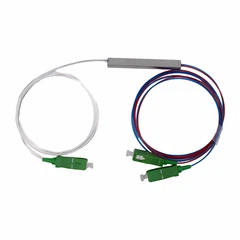
For home fiber projects, bend-insensitive G.657A fiber drop cables are the most widely adopted product category. This special fiber cable is designed to withstand tight bending around door frames, wall corners, narrow conduits and indoor wiring routes without measurable signal loss, which dramatically reduces installation difficulty in existing buildings. The most common outdoor/indoor FTTH drop cable structures include the flat LSZH or PE jacket design with two parallel strength members, supporting both aerial and duct deployment. Together with PLC fiber splitters-typically 1:4, 1:8, 1:16 and 1:32 configurations-these passive components form the core of the last-mile residential optical network, splitting a single feeder fiber into multiple subscriber connections at low cost and high reliability.

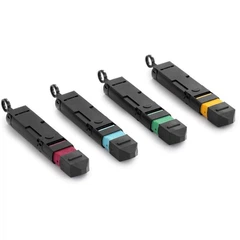
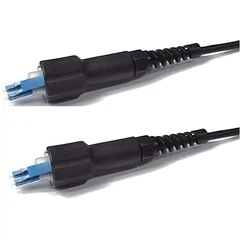
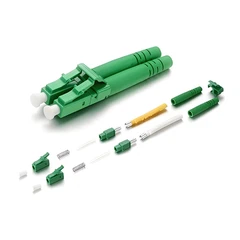
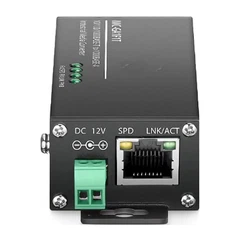
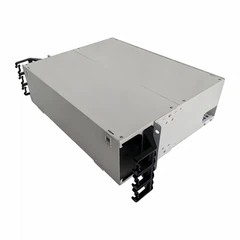
Beyond the basic drop cable, a complete FTTH deployment also requires a full ecosystem of supporting components: fiber distribution terminals (ODPs), wall-mounted or pole-mounted fiber access terminals, pre-terminated SC/LC patch cords, fiber optic adapters, splice-on connectors, optical termination boxes (ATBs/NTUs), and ruggedized outdoor fiber enclosures. Each component must meet environmental ratings such as IP55 or IP65 for outdoor use, and withstand wide temperature ranges, UV exposure and humidity for 20-year service life.
As a professional fiber optic manufacturer, BROLIN supplies complete FTTH product packages for home broadband installation projects of any scale. Our product portfolio includes G.657A1/G.657A2 FTTH drop cables in single-fiber and dual-fiber designs, mini PLC splitters in blockless and ABS box formats, pre-terminated SC/APC and SC/UPC fiber patch cords, wall-mounted indoor termination boxes, outdoor fiber distribution cabinets, and optical fiber fast connectors designed for quick field termination without fusion splicing. All products are manufactured under strict ISO 9001 quality control and tested for insertion loss, return loss, tensile strength, temperature cycling and mechanical durability. They are designed for simple, fast field installation and long-term stable operation, helping operators reduce truck rolls and lower total deployment cost. The products are widely used in residential broadband projects across Southeast Asia, Latin America, the Middle East, Africa and Eastern Europe, supporting both greenfield fiber builds and copper-to-fiber migration programs.
Industry forecasts indicate that global FTTH household coverage will keep rising steadily over the next several years. More governments are launching national fiber broadband plans and subsidy programs to bridge the digital divide in rural and underserved areas, while major telecom carriers continue to retire legacy copper networks and invest aggressively in XGS-PON and NG-PON2 architectures to support multi-gigabit residential internet demand. As smart home adoption, cloud gaming and immersive media become mainstream, the need for reliable, future-proof fiber connectivity into every home will only intensify, reinforcing FTTH as the foundation of the next-generation digital society.
BROLIN remains committed to delivering high-quality, cost-effective FTTH fiber optic solutions that help operators and installers build faster, more reliable home broadband networks. With flexible customization, competitive lead times and dependable global shipping, we are your trusted partner for residential fiber access projects of any scale.

Send Inquiry