


How to test a fiber splitter?
May 27, 2026
Leave a message
Hey there! As a fiber splitter supplier, I've had my fair share of experiences with testing these nifty devices. In this blog, I'll walk you through how to test a fiber splitter, sharing some tips and tricks along the way.
Why Testing is Crucial
First off, let's talk about why testing a fiber splitter is so important. A fiber splitter is a key component in fiber optic networks, used to divide an optical signal into multiple outputs. If it's not working properly, it can lead to signal loss, poor network performance, and a whole bunch of headaches for end - users. So, making sure it's in top - notch condition is a must.
Tools You'll Need
Before we start testing, you'll need a few tools. You'll need an optical time - domain reflectometer (OTDR), a light source, and a power meter. The OTDR is great for measuring the length of the fiber, detecting any breaks or bends, and getting an overall picture of the fiber's condition. The light source is used to send a signal through the fiber, and the power meter measures the strength of the signal at the output.


Step 1: Visual Inspection
The first step in testing a fiber splitter is a visual inspection. Take a close look at the splitter for any physical damage. Check the connectors for dirt, scratches, or misalignments. If you see any issues, it might be a sign that the splitter is not working correctly. Make sure the fiber cables are properly connected and there are no kinks or bends in the cables.
Step 2: Power Measurement
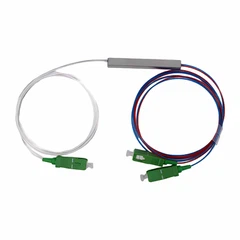
Once you've done the visual inspection, it's time to measure the power. Connect the light source to the input port of the fiber splitter. You can use a Mini Plc Splitter [/fiber - splitter/plc - splitter/mini - plc - splitter.html] for this test. Then, connect the power meter to each output port one by one. The power meter will show you the power level of the signal at each output.
The power level should be within a certain range. If the power level is too low, it could mean there's a problem with the splitter or the fiber connection. On the other hand, if the power level is too high, it might indicate a short circuit or some other issue.
Step 3: Insertion Loss Measurement
Insertion loss is another important parameter to measure. It refers to the amount of power lost when the signal passes through the splitter. To measure the insertion loss, you'll need to compare the power of the input signal with the power of the output signal.
First, measure the power of the input signal using the power meter. Then, measure the power of each output signal. The difference between the input power and the output power is the insertion loss. A good fiber splitter should have a low insertion loss. If the insertion loss is too high, it means the splitter is not efficient at splitting the signal.
Step 4: Return Loss Measurement
Return loss is also a crucial factor. It measures the amount of light that is reflected back from the splitter. High return loss can cause interference and affect the performance of the network.
To measure the return loss, you can use an OTDR. The OTDR sends a pulse of light into the fiber and measures the amount of light that is reflected back. A high return loss value indicates that there is less reflection, which is a good thing.
Step 5: Testing with Different Wavelengths
Fiber splitters can work with different wavelengths of light. It's a good idea to test the splitter with different wavelengths to make sure it performs well across the board. You can use a light source that can emit different wavelengths and repeat the power, insertion loss, and return loss measurements for each wavelength.
Step 6: Long - Term Testing
For a more comprehensive test, you can perform long - term testing. This involves monitoring the performance of the fiber splitter over an extended period. You can use automated testing systems to record the power levels, insertion loss, and return loss at regular intervals. This will help you detect any gradual changes in the splitter's performance.
Step 7: Comparing with Specifications
After you've completed all the tests, compare the results with the manufacturer's specifications. The specifications will tell you the acceptable range for power, insertion loss, return loss, and other parameters. If the test results are outside the acceptable range, the splitter might be faulty and need to be replaced.
Different Types of Fiber Splitters
There are different types of fiber splitters, such as the Fused Optical Coupler [/fiber - splitter/fused - fiber - coupler/fused - optical - coupler.html] and the Fiber Optic Plc Splitter [/fiber - splitter/plc - splitter/fiber - optic - plc - splitter.html]. Each type has its own characteristics and testing requirements.
The Fused Optical Coupler is made by fusing multiple fibers together. It's relatively simple in design and is often used in applications where cost is a major factor. When testing a Fused Optical Coupler, you need to pay special attention to the fusion points, as they can be a source of signal loss.
The Fiber Optic Plc Splitter, on the other hand, is based on planar lightwave circuit technology. It offers better performance and higher reliability compared to the Fused Optical Coupler. When testing a Fiber Optic Plc Splitter, you need to ensure that the circuit is free from any defects and that the signals are evenly split among the output ports.
Conclusion
Testing a fiber splitter is a multi - step process that requires the right tools and a good understanding of the device. By following the steps outlined in this blog, you can ensure that your fiber splitters are working properly and providing reliable performance.
If you're in the market for high - quality fiber splitters, we're here to help. We offer a wide range of fiber splitters, including Mini Plc Splitters, Fused Optical Couplers, and Fiber Optic Plc Splitters. Whether you're setting up a new network or upgrading an existing one, we've got the products you need. If you have any questions or want to discuss your specific requirements, feel free to reach out to us. We're always happy to help you find the best solution for your fiber optic needs.
References
- "Fiber Optic Testing Handbook", published by an industry - leading optical communication research group.
- "Understanding Fiber Optic Splitters", a white paper from a well - known fiber optic component manufacturer.
Send Inquiry